

From the yard to the shelf
From the yardto the board
The cheese passes through our hands from the first step to the last. Here is each one.
How we make it
A Canastra tradition, made here
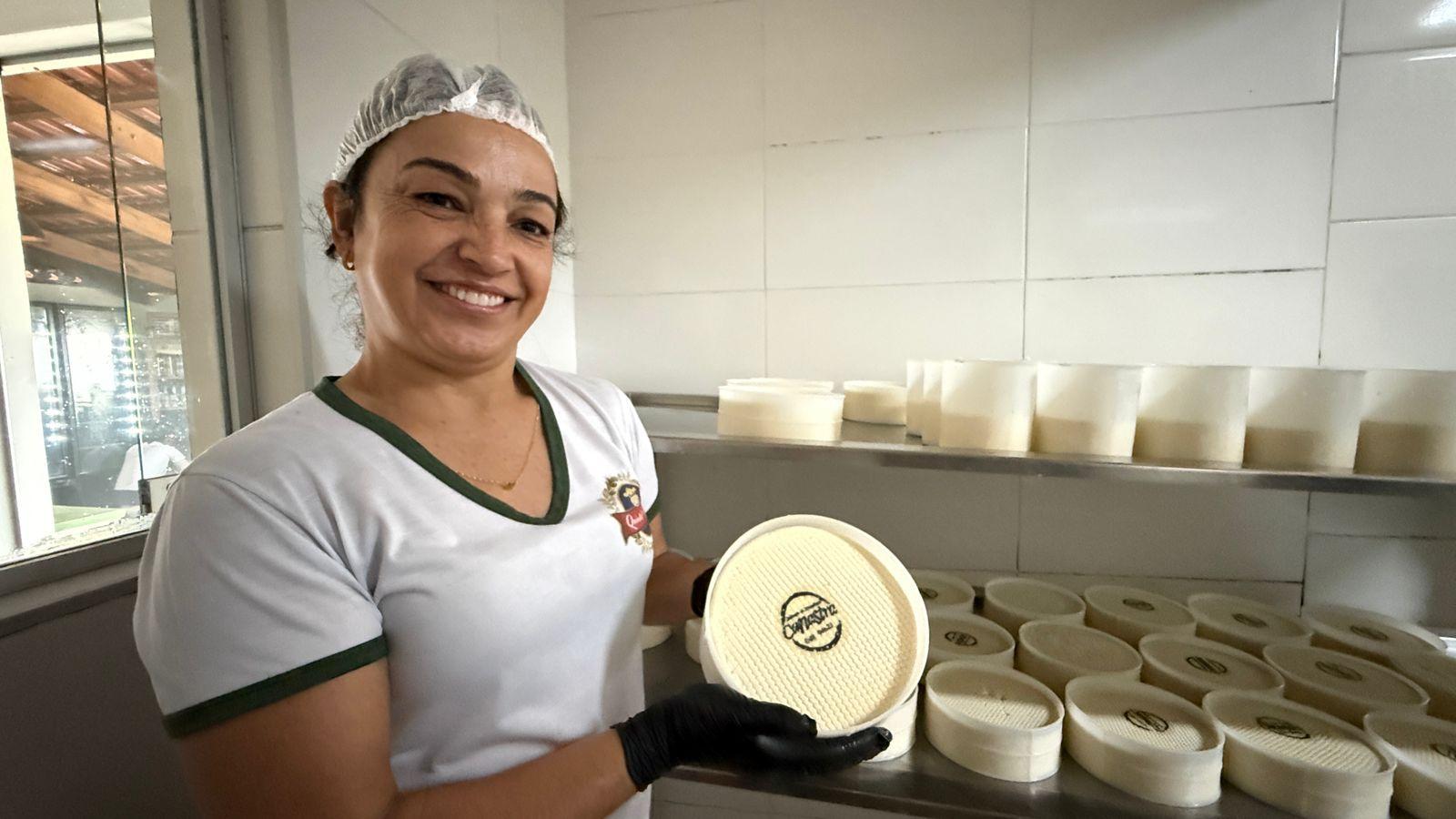
Canastra artisan Minas cheese has been made the same way for generations in the region: raw milk, pingo, rennet, hand work and ageing on wooden boards. In 2024, São João Batista do Glória became part of the Canastra Geographical Indication, and our cheese could finally be called by its name.
We learned the craft from people who already did it: in the Good Practices course, with Ivair and Lúcia, and with Roberto, a master cheesemaker. The eight steps below are the path the milk takes here every day, from the yard to the ageing board.
Step by step
Eight steps and no hurry
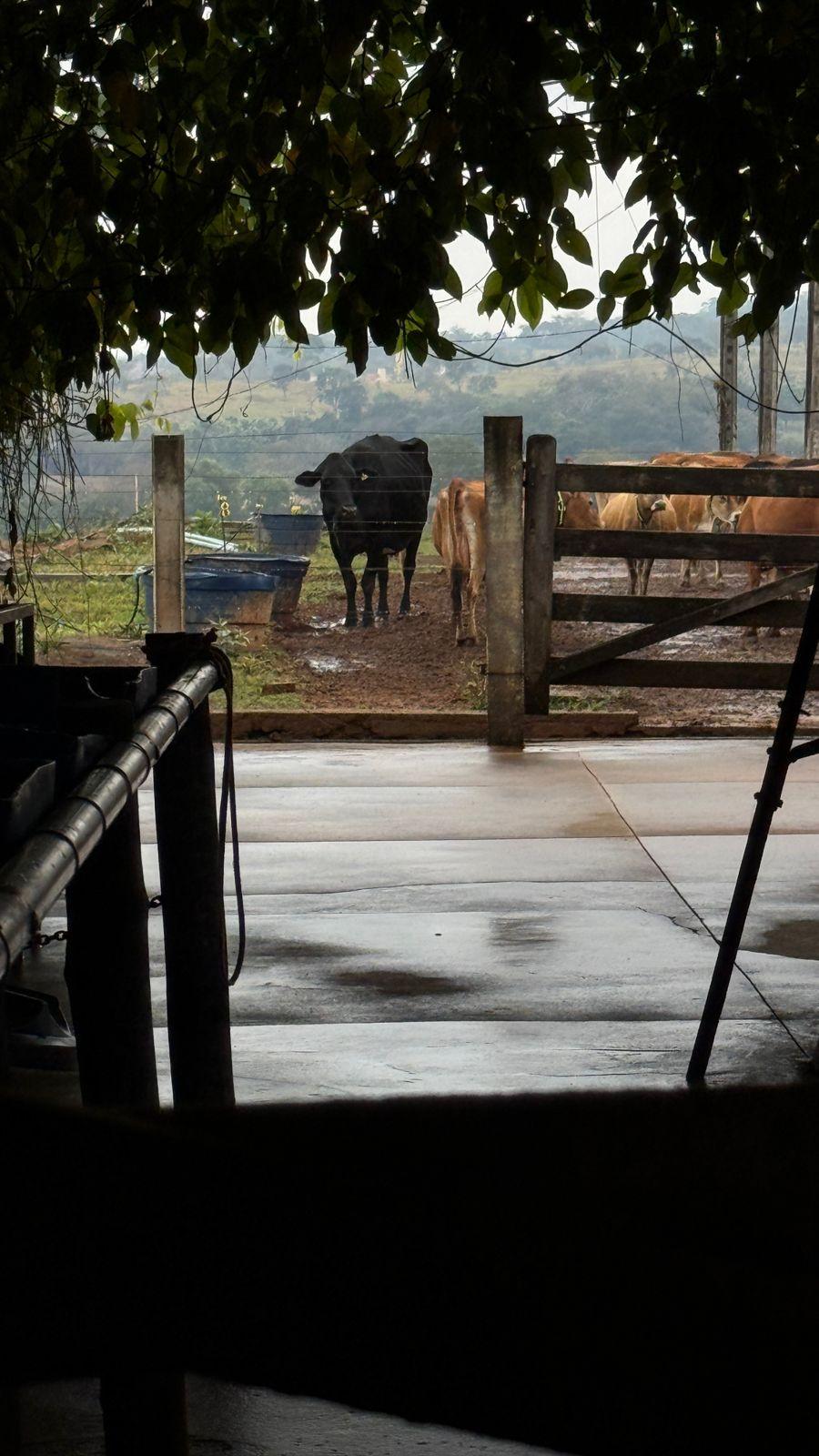
The cows arrive
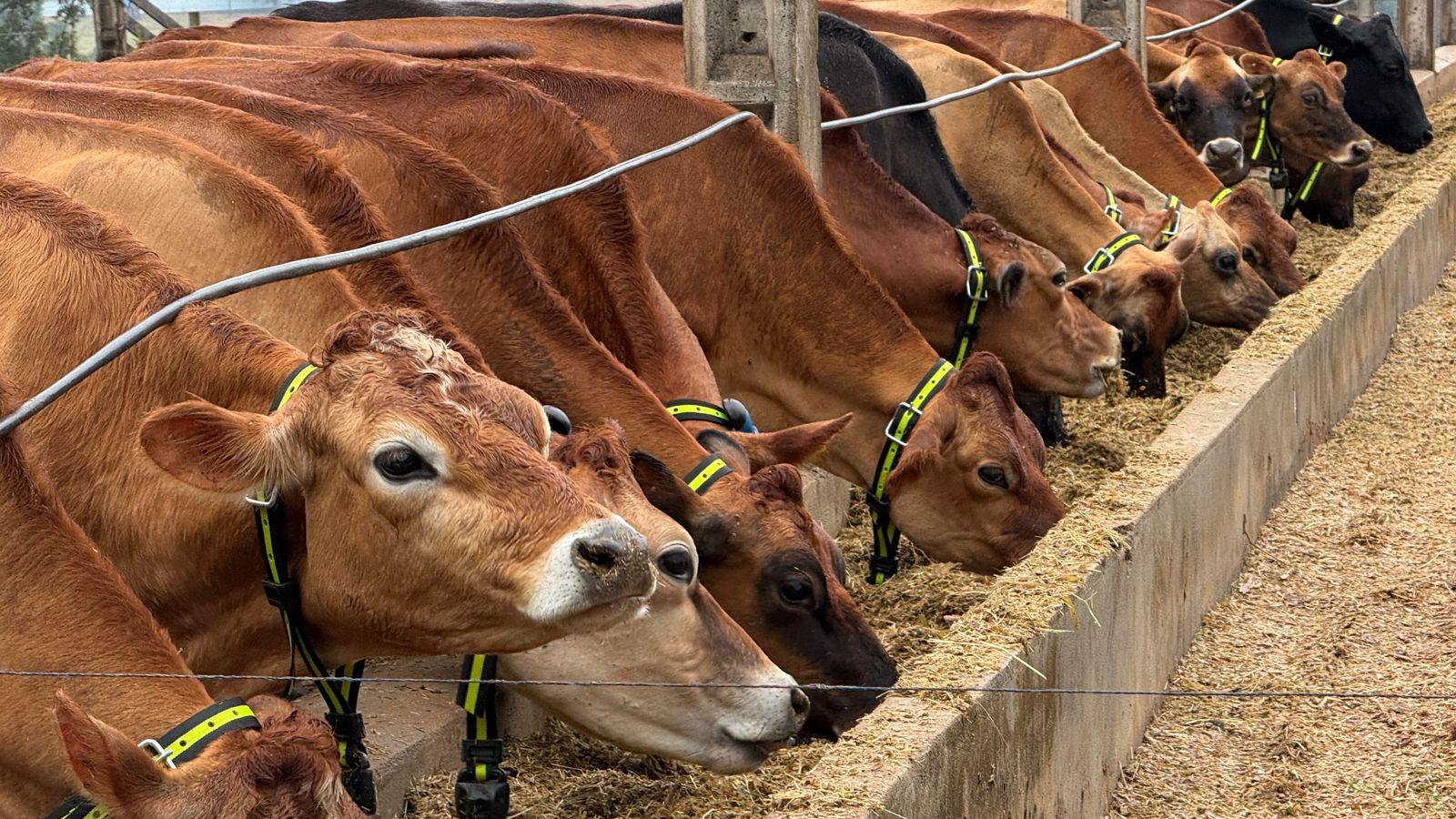
The cows come into the yard twice a day, at 5 a.m. and 4 p.m. The first milking starts before sunrise; the second, in the middle of the afternoon. The herd is Jersey, a dairy breed with more fat and protein.
Each in her place
Before starting, we settle the cows calmly, each in her place. Cleaning of the milking area follows a fixed schedule, with a record of every sanitising for inspection.
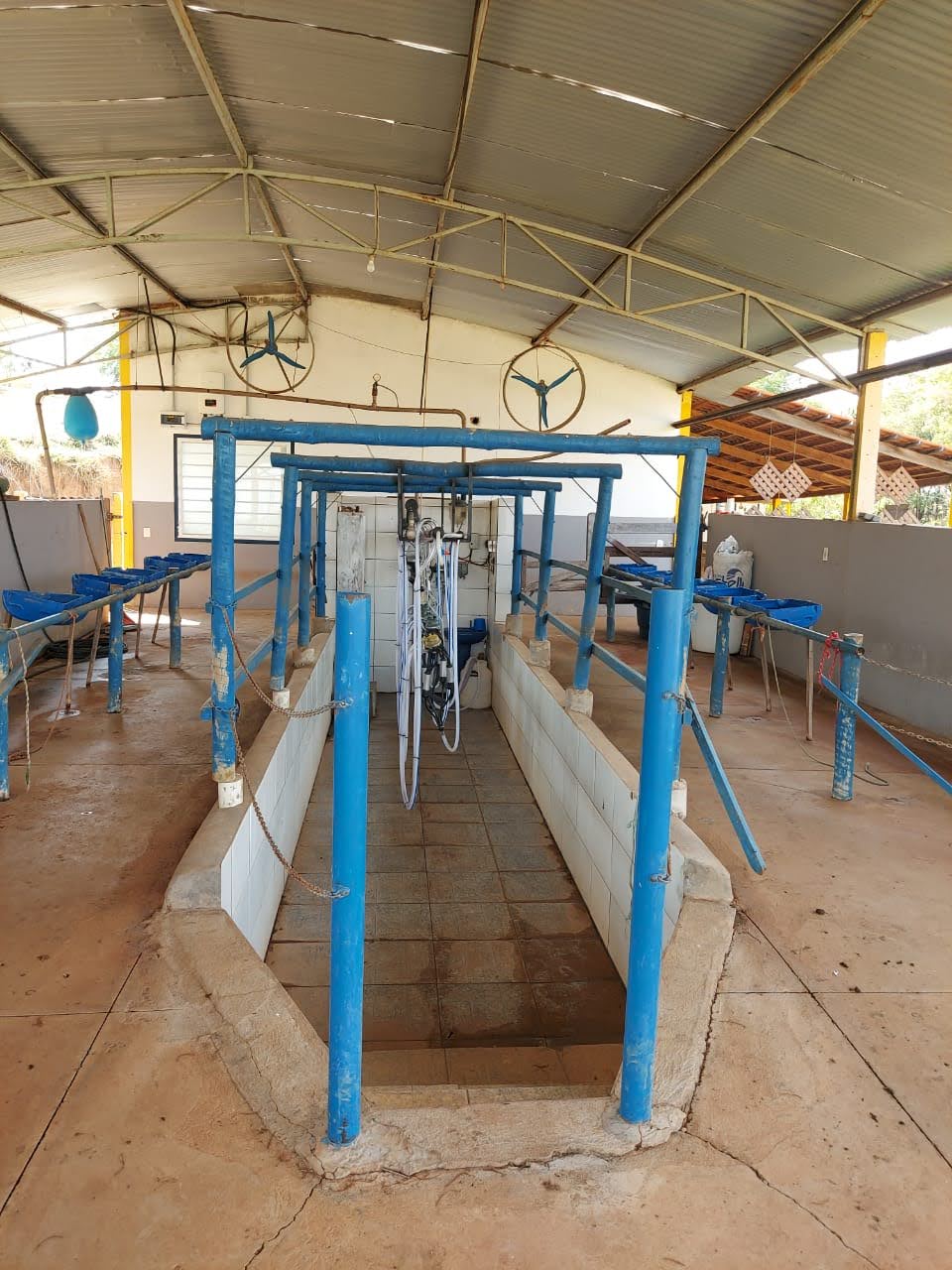
The milking
The milk leaves the milking and goes straight to the dairy. It is not pasteurised: artisan Minas cheese is made with raw milk, and that milk is where the flavour of the region comes from.
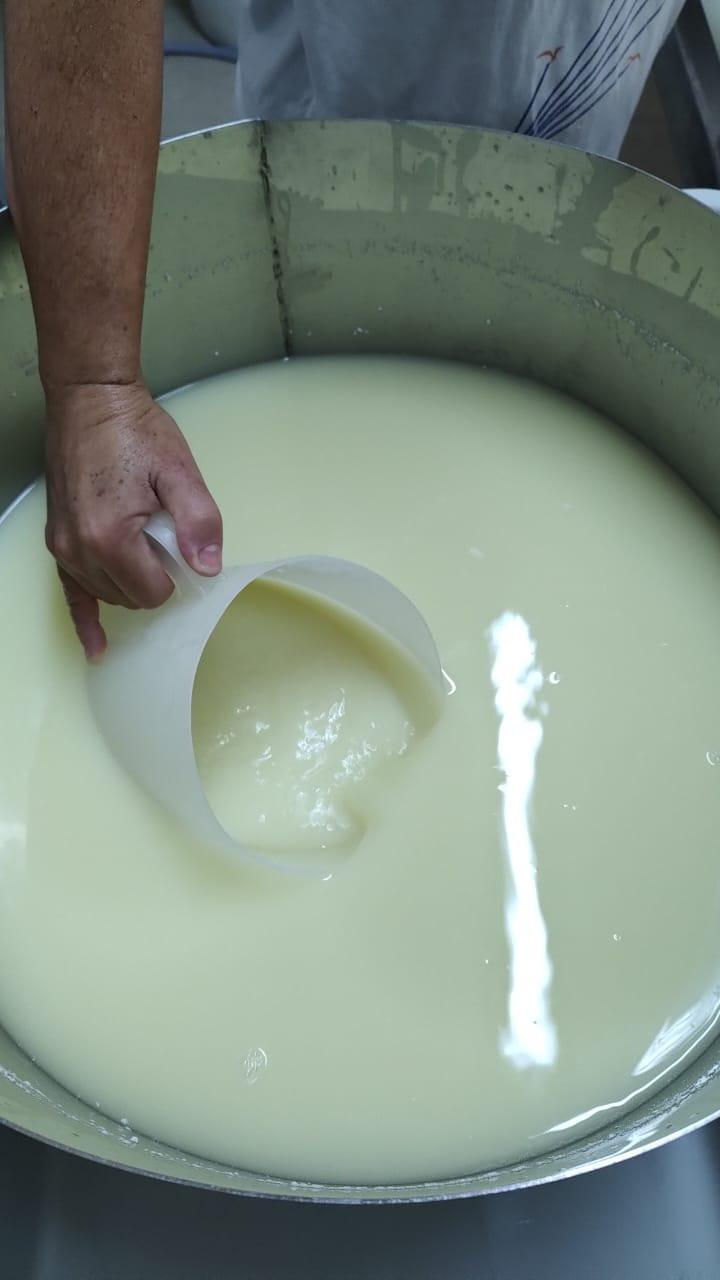
From yard to tank
A hose carries the milk to the dairy tank. The tanks go through sanitising, and each one is recorded with a photo.
The test
Before it becomes cheese, the milk is tested: pH, temperature, coliforms and whatever else the law requires for the seal. Each batch is recorded with date, quantity and destination.
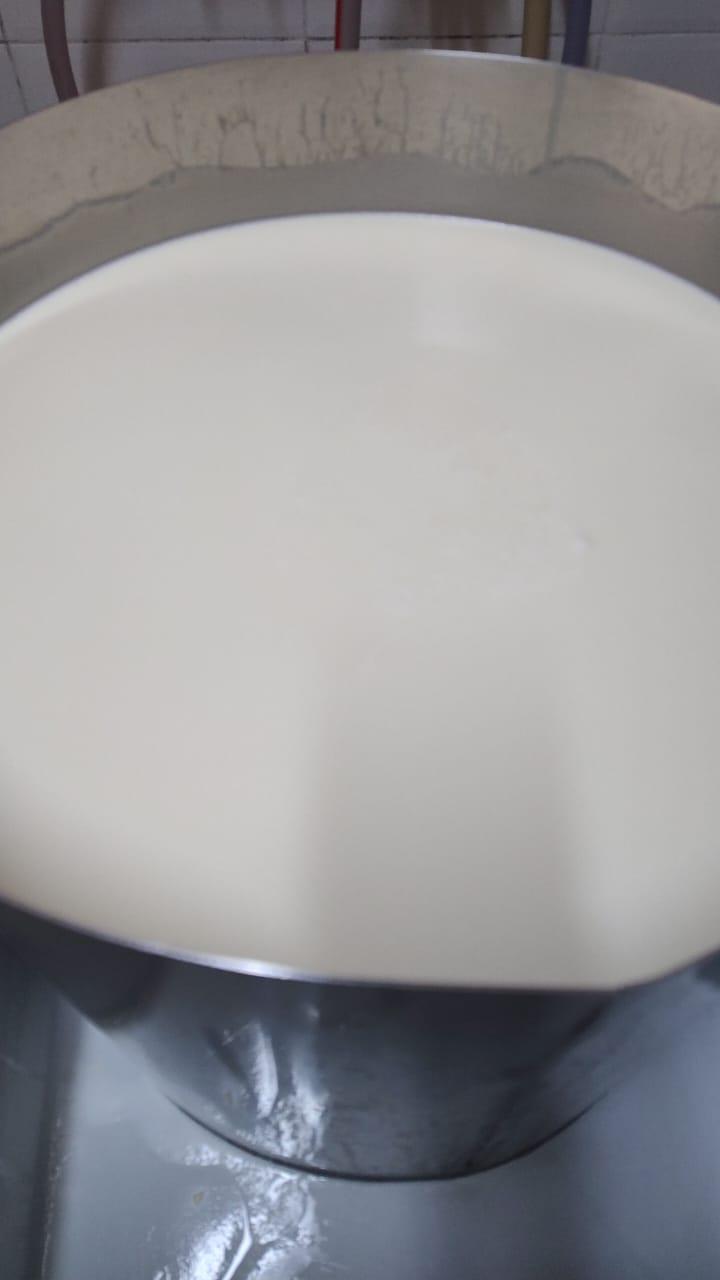
Pingo and rennet
In go the pingo, the natural starter from the previous day's whey, and the rennet. The pingo carries from one day to the next the microorganisms that give the Canastra its flavour. In 30 minutes, the milk sets.
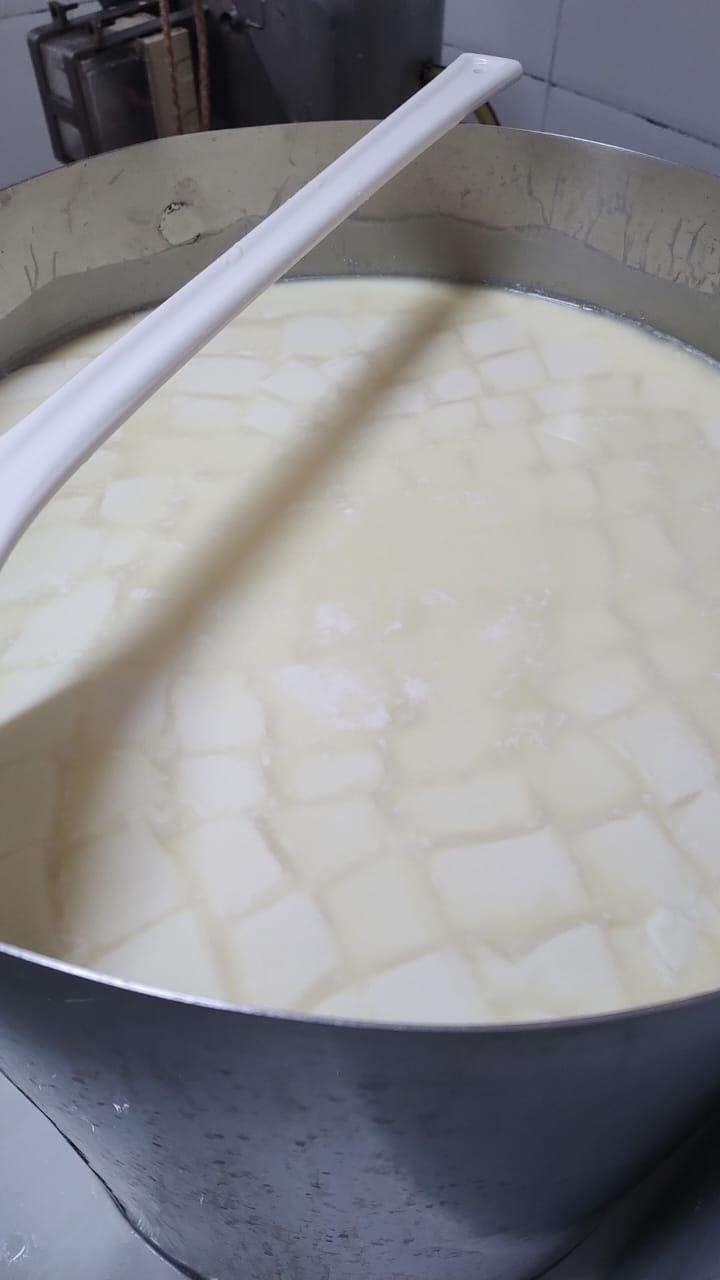
Cutting and salting
The set curd is cut, stirred and put into the moulds. Then comes the salt. This is the part of the work that depends most on the hand: the point of the cut and of the pressing is learned by doing.
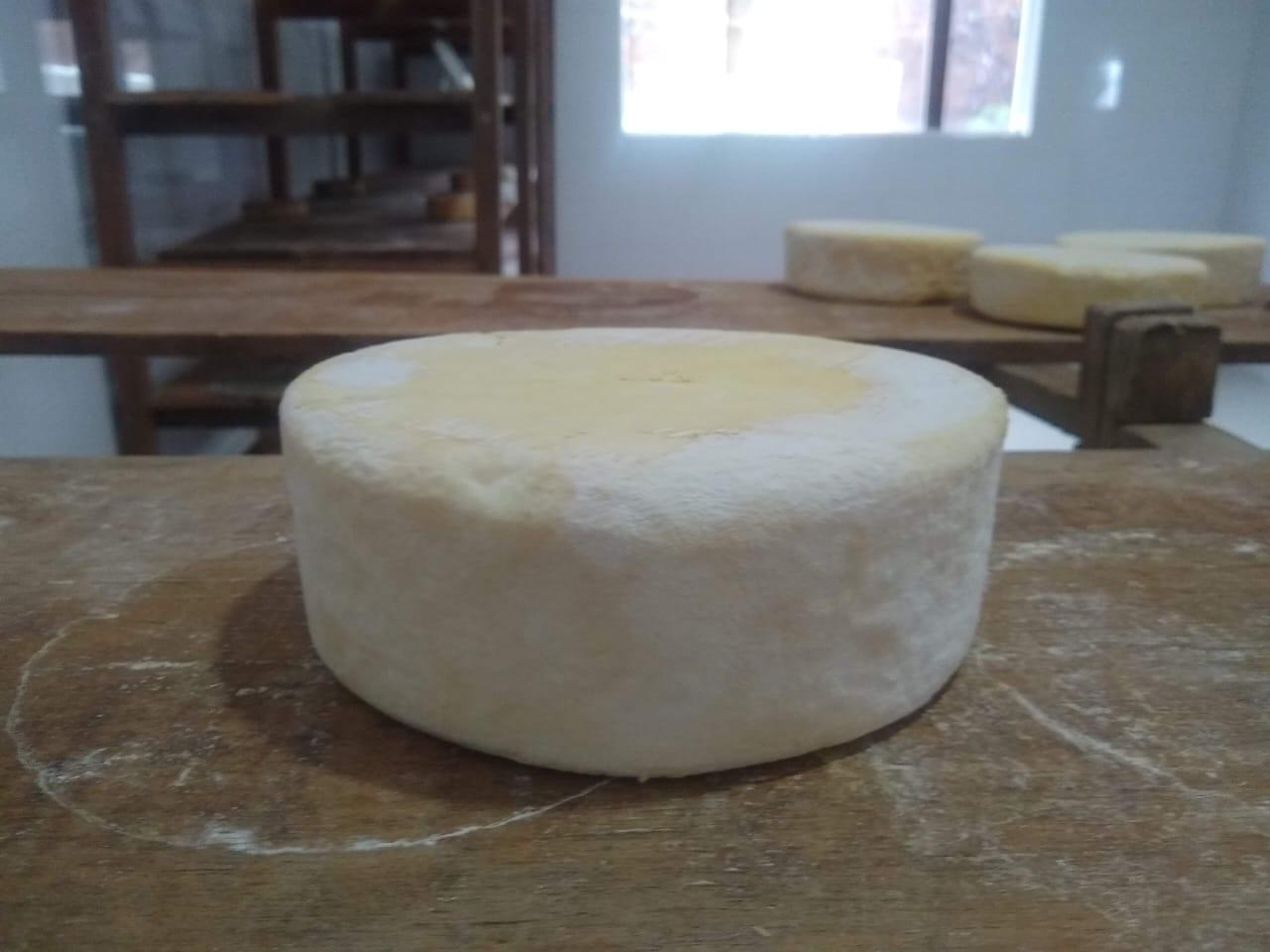
Ageing
The cheese goes to the boards of the ageing room and moves from board to board as it ripens: at least 14 days, and over 90 for the long-aged ones. When it is ready, it gets its seal and leaves the dairy.
The milk
Two milkings a day
The cows at the quintal are Jerseys, a breed known for milk with more fat and protein. Milking happens at 5 a.m. and 4 p.m., and the milk goes straight to the dairy.
The same milk becomes cheese and, on Mondays, doce de leite. Everything that leaves the dairy goes through the production record: batch, temperature, pH and destination, so that every wheel can be traced back to the day it was made.
Come to the backyard
Come and seeup close
Milking and cheesemaking are open to visitors. Just arrive and arrange it with the dairy.